


Operational due diligence (ODD) has long been the unglamorous counterpart to investment due diligence. It is essential, rigorous, and notoriously resource intensive. As allocators face growing pressure to deploy capital faster without compromising on risk, a new wave of technology promises to transform the ODD process. At Thomas Murray, we have spent decades working at the intersection of institutional risk assessment and market infrastructure oversight. That experience has given us a clear view of what separates genuinely transformative ODD technology from platforms that simply digitise an already inefficient process.
Here are the five criteria that should sit at the top of every investor's checklist.
1. Depth and Automation of Data Aggregation
The most time-consuming element of any ODD review is the gathering of information. From fund managers, prime brokers, administrators, auditors, and custodians. Effective ODD technology must go far beyond document management. Look for platforms that offer automated data ingestion from multiple structured and unstructured sources, including DDQs, audited financials, AIFMD and Form PF filings, and service provider confirmations. Standardised data taxonomies that enable comparison across managers and vintages are equally important, as is integration with third-party data providers. Regulatory registries, litigation databases, registered agent records can also reduce reliance on manual lookups.
At Thomas Murray, our data infrastructure spans global custodians, sub-custodians, and market infrastructure providers across more than 100 markets. That depth of proprietary reference data is what allows us to contextualise manager-level information against a verified picture of the broader service provider landscape, something no document repository alone can replicate. A system that merely stores documents is a filing cabinet. A system that extracts, structures, and cross-references data against an independent knowledge base is a genuine force multiplier.
2. Robust Workflow and Task Management
ODD is not a single event, it is a repeatable, multi-stakeholder process that must be documented at every stage for compliance and audit purposes. Platforms should offer configurable workflows that reflect your firm's proprietary ODD framework, not a generic template. Role-based access controls matter too: analysts, senior reviewers, legal, compliance, and external consultants each need visibility appropriate to their function. Audit trails and version history on every document, questionnaire, and decision are non-negotiable and essential for regulatory scrutiny and internal governance.
Thomas Murray's fund oversight platform is built around exactly this principle. Our workflow engine is designed to mirror the cadence of a live due diligence process, with task assignment, deadline tracking, and escalation logic that adapts to the complexity of each engagement. Critically, our workflows are configurable without expensive bespoke development. Allocators can embed their own scoring methodologies and review criteria directly into the platform. ODD rarely runs in a straight line, and the best technology is built with that reality in mind.
3. Intelligent Risk Scoring and Red Flag Detection
Perhaps the most significant value-add of modern ODD technology is the ability to surface risk signals that a human reviewer might miss under time pressure. Look for automated risk scoring across operational dimensions, governance and ownership structure, valuation independence, counterparty concentration, business continuity, cybersecurity posture, and AML/KYC compliance, alongside AI-assisted review of fund documents, PPMs, and side letters to identify non-standard terms or potential conflicts of interest. Adverse media and sanctions screening should be integrated directly into the manager review workflow, with transparent documentation of screening methodology and refresh cadence.
Thomas Murray has been assessing counterparty and operational risk for institutional investors for over 30 years. Our risk ratings are grounded in that accumulated analytical heritage, not purely algorithmic, which means they are explainable, defensible, and designed to withstand scrutiny from investment committees and regulators alike. We apply a consistent, structured methodology that benchmarks managers and their service providers against verified peer groups, flagging material deviations rather than generating opaque scores that clients cannot interrogate. Explainability is not a nice-to-have; in a regulated environment, it is a fiduciary requirement.
4. Secure Manager Engagement and DDQ Standardisation
The ODD relationship is inherently bilateral. Allocators ask questions; managers respond. Technology that streamlines only the allocator's side of this equation misses half the opportunity. The platform you choose should offer a manager-facing portal that allows GPs to respond to DDQs, upload documents, and track outstanding requests in a single, secure environment, eliminating the fragmented email chains that undermine process integrity. Support for industry-standard questionnaire frameworks, ILPA DDQ, AIMA ODD questionnaire, SBAI standards, combined with the ability to layer on firm-specific questions, ensures coverage without redundancy.
Thomas Murray's manager engagement tools are designed with the GP experience in mind as well as the allocator's. Smart questionnaire logic routes questions based on fund type, domicile, strategy, and prior responses, avoiding the friction that causes managers to disengage or revert to offline processes. Our platform operates to institutional-grade security standards, including encryption, granular data residency controls, and independently verified compliance with SOC 2 Type II and GDPR requirements, providing confidence to both sides of the relationship that sensitive information is protected.
5. Ongoing Monitoring and Portfolio-Level Oversight
ODD is not a box ticked at onboarding. Operational risk evolves, key personnel depart, auditors are replaced, regulatory sanctions are issued, and cyber incidents occur. The most sophisticated platforms extend beyond point-in-time due diligence to deliver continuous monitoring of operational variables throughout the manager relationship, with alert triggers for material changes. Periodic re-review workflows should automatically prompt updated questionnaires and document requests on a defined schedule, while portfolio-level dashboards give CIOs and risk committees a real-time view of operational risk concentration across the entire book, by counterparty, domicile, administrator, or risk category.
This is where Thomas Murray's heritage in market infrastructure oversight becomes particularly relevant. Our continuous monitoring capability draws on the same data networks we use to track developments across global custody chains and post-trade infrastructure, meaning our alerts are grounded in verified intelligence, not just media scraping. For institutional allocators managing dozens or hundreds of manager relationships, the ability to identify deteriorating operational quality before it becomes a headline is precisely the kind of edge that the right technology should deliver. Ongoing oversight is not an add-on; it is the core of a mature ODD programme.
The Bottom Line
The ODD technology market is maturing rapidly, and allocators who deploy the right infrastructure will achieve faster, more consistent, and more defensible due diligence outcomes. But selecting that infrastructure is itself a due diligence exercise. Scrutinise vendor claims, request reference calls with peer institutions, and satisfy yourself that any platform you adopt enhances, rather than replaces, the professional judgment of your operations team.
The five criteria above, data aggregation depth, workflow sophistication, intelligent and explainable risk detection, secure manager engagement, and ongoing monitoring capability, provide a structured lens through which to assess the field. At Thomas Murray, they are the principles that have shaped our own approach to building ODD solutions for institutional allocators. Applied rigorously, they should lead you to platforms that genuinely move the needle, and away from those offering little more than a digitised filing cabinet.
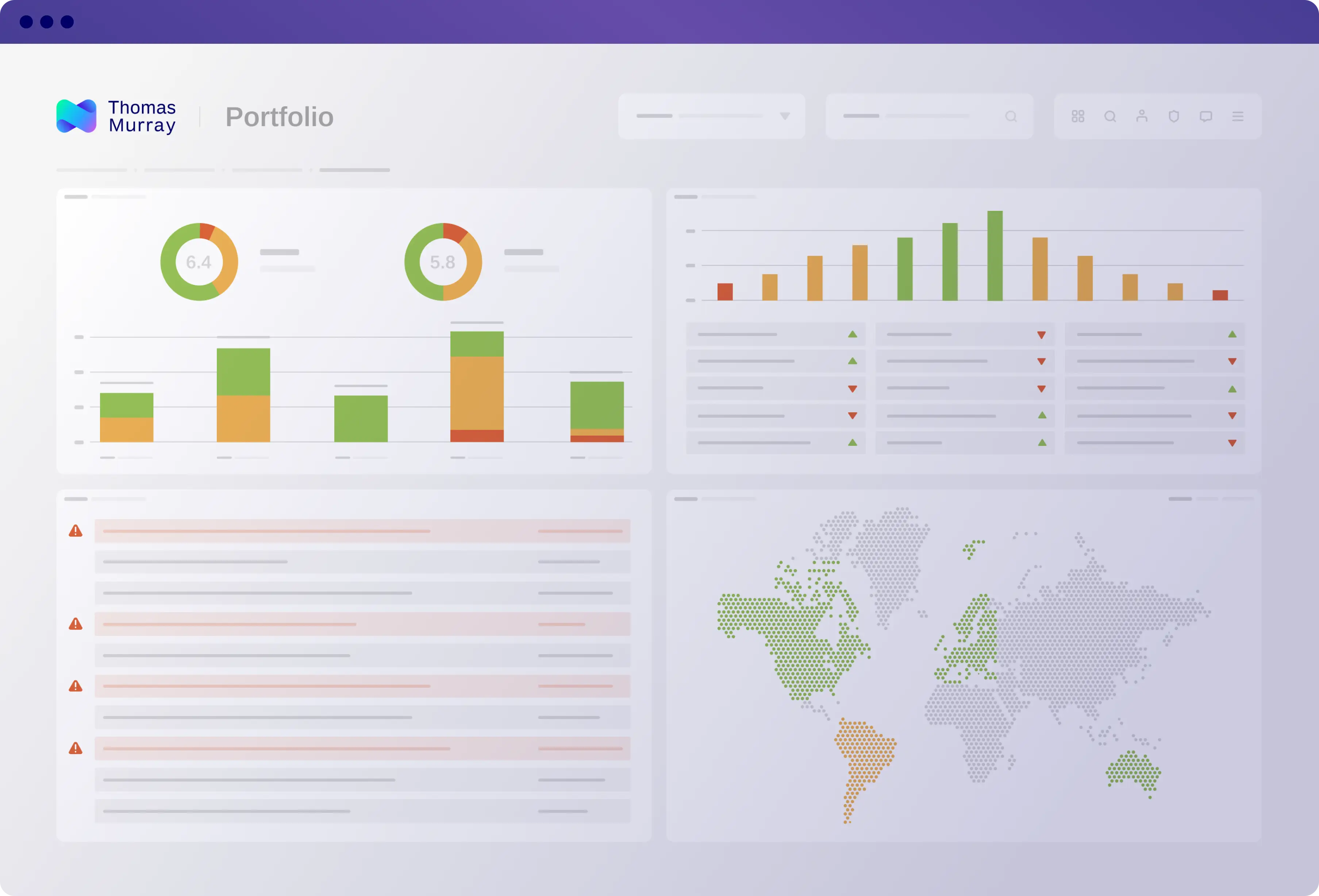
Operational Due Diligence
Automate your operational due diligence with Orbit Risk technology.
Get ongoing monitoring of your investment managers, track adverse media, and receive cyber risk alerts as they happen.
Insights

How Often Should ODD Be Refreshed? A Practical Framework
Most allocators do a full ODD review every 12 to 36 months, but the right cadence depends on risk. Here's a practical five-step framework for deciding how often to review each manager.

What AI Actually Changes About the DDQ (and What It Doesn't)
AI is transforming DDQ workflows, but it doesn't change what a questionnaire actually is: self-reported data. Here's where the line falls, and what to ask before adopting an AI-assisted tool.

From RFP to Ongoing ODD: Closing the Monitoring Gap
RFP rigour rarely survives past manager selection. What a robust RFP process looks like, and how to close the monitoring gap that opens once it's over.

Media Monitoring as an ODD Signal: What to Watch For
Reputational signals move faster than annual reviews. Here's what real-time media monitoring should catch in operational due diligence, and why.